A familiar rigour for a new set of metrics
While sustainability is seen as a new specialism, most of what it demands is already familiar to one team in particular: the designers.
In this piece, we explore why design-led brands are already equipped to meet the challenge of EcoDesign, and why its answers lie in recovering principles the discipline has always held.


Moving beyond compliance
Sustainability is often framed as a modern challenge. A new pressure, driven by rising regulation and growing scrutiny. Product brands feel it coming from every direction, with targets to meet, disclosures to publish and expectations to satisfy.
And so, the conversation tends to begin in compliance: teams measure, benchmark and chip away at emissions, materials and energy use, shaving percentages wherever they can. These efforts build accountability, but they rarely build advantage. Sustainability consultants can help brands account for the impact.
Solving it – turning sustainability into genuine consumer demand – is a job for the people trained to create differentiation.


Expanding the brief
Industrial designers are problem-solvers by DNA. They take brand ambition, technical constraint and human need, and turn them into something desirable. Their process determines how a product performs, how it feels, if it earns its place in everyday life.
Their job has always been to make things better: better to use, better to manufacture, better for the business. What “better” means has simply kept evolving. Alongside desirability, feasibility and viability now sits environmental responsibility – not a departure from the brief, but simply an extension of it.

How established practice shapes future impact
Design has always carried consequence. Every decision shapes cost, whether through tooling complexity, manufacturing time or material choice. Eco-design simply adds a new layer of accountability, as decisions now also carry global impact and resource implications.
The disciplines design teams already practise map directly onto eco-design. Economy of materials lowers embodied carbon as readily as it lowers spend. Simplicity of production cuts energy demand as it improves consistency at scale.
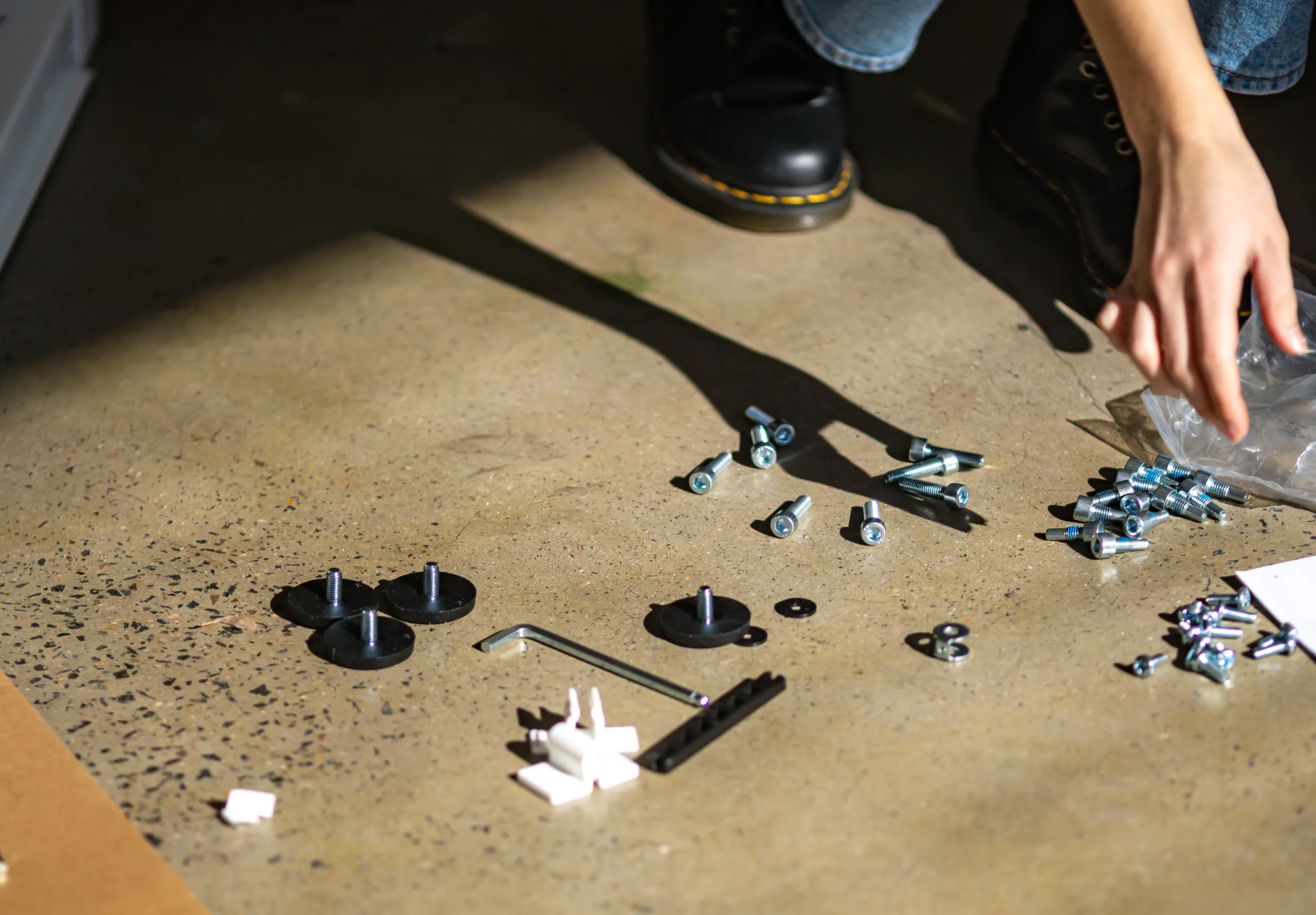
Ease of assembly, extended to disassembly, enables repair, refurbishment and material recovery at end of life. And these disciplines increasingly drive commercial value too, deepening engagement with the purpose-driven consumers who now shape category growth.


Eco-design as an evolution of design thinking
In this sense, EcoDesign doesn’t ask designers to work differently. It asks them to apply familiar rigour to a new set of metrics at the point in the process where impact is still shaped, rather than merely measured.
Reframed this way, sustainability becomes a source of product advantage rather than a drag on it. Products become lighter, simpler, longer-lasting, easier to repair and easier to recover. Each decision strengthens environmental performance and sharpens market position at the same time.
Constraint has always been a creative catalyst, and environmental limits are simply the newest set.


The opportunity ahead
For brands, this is encouraging. The capability to meet the eco-design challenge isn’t something to be built from scratch or bought in as a new specialism entirely. It is already there, in the design expertise brands draw on – shaped by decades of practice, and ready to be put to a broader purpose.
The opportunity lies in applying what good design has always understood, with greater intent, to create products that perform responsibly today and remain relevant tomorrow.