Can yesterday’s technology solve today’s problems?
As mobile phones have grown more capable, simplicity has become radical.
Small screens, physical keypads and limited menus are being revived as a defence against the attention economy.
The new “dumbphone” is an exercise in adaptive reuse: an obsolete mobile typology has been reassigned to solve a problem created by its successor.
The question is, can design turn this revival into something that feels like an upgrade rather than a sacrifice?
Three brands are answering it in very different ways.


Friction made desirable
Ease is seductive, and that’s exactly the problem.
The smoother an action feels, the less anyone notices doing it. Reintroduce a little resistance, however and the habit becomes a decision again.
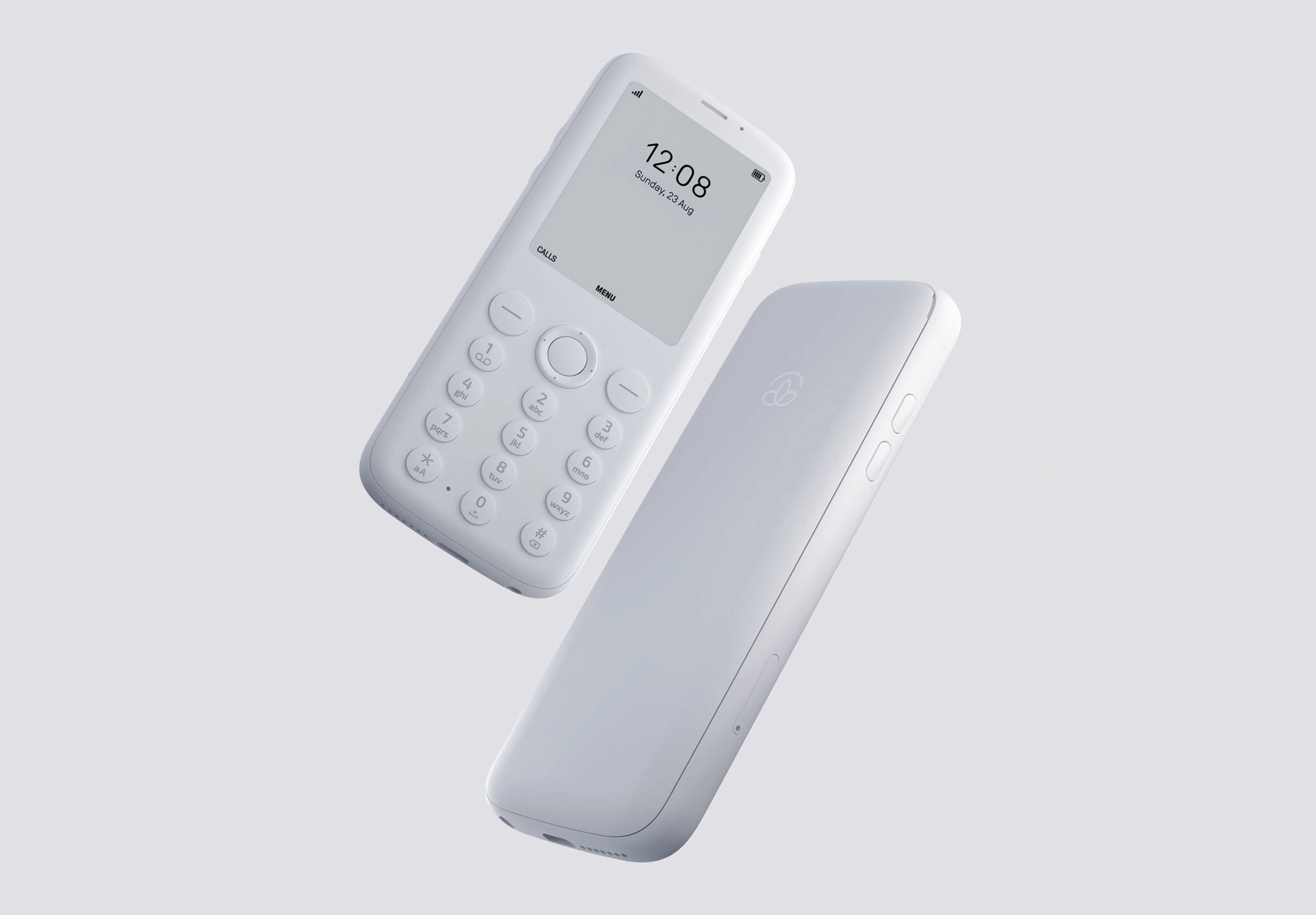
The Light Phone builds that resistance into its hinge. Open it to start something, close it when you’re done, a gesture as physical and satisfying as putting down a book. There’s real joy in that click, the weight of it in your hand – a kind of friction that we lost to touchscreens. Perhaps what felt awkward – or more, human – about old tech may be exactly what we’ve come to miss.
Its website sells the same feeling: skies, clouds, sunlit fields, and hand-lettered lines that read like something scrawled on the back of an old photograph. It’s less a tech brand than a memory of being outside as a kid.
Credits and further reading


Restraint as a design statement
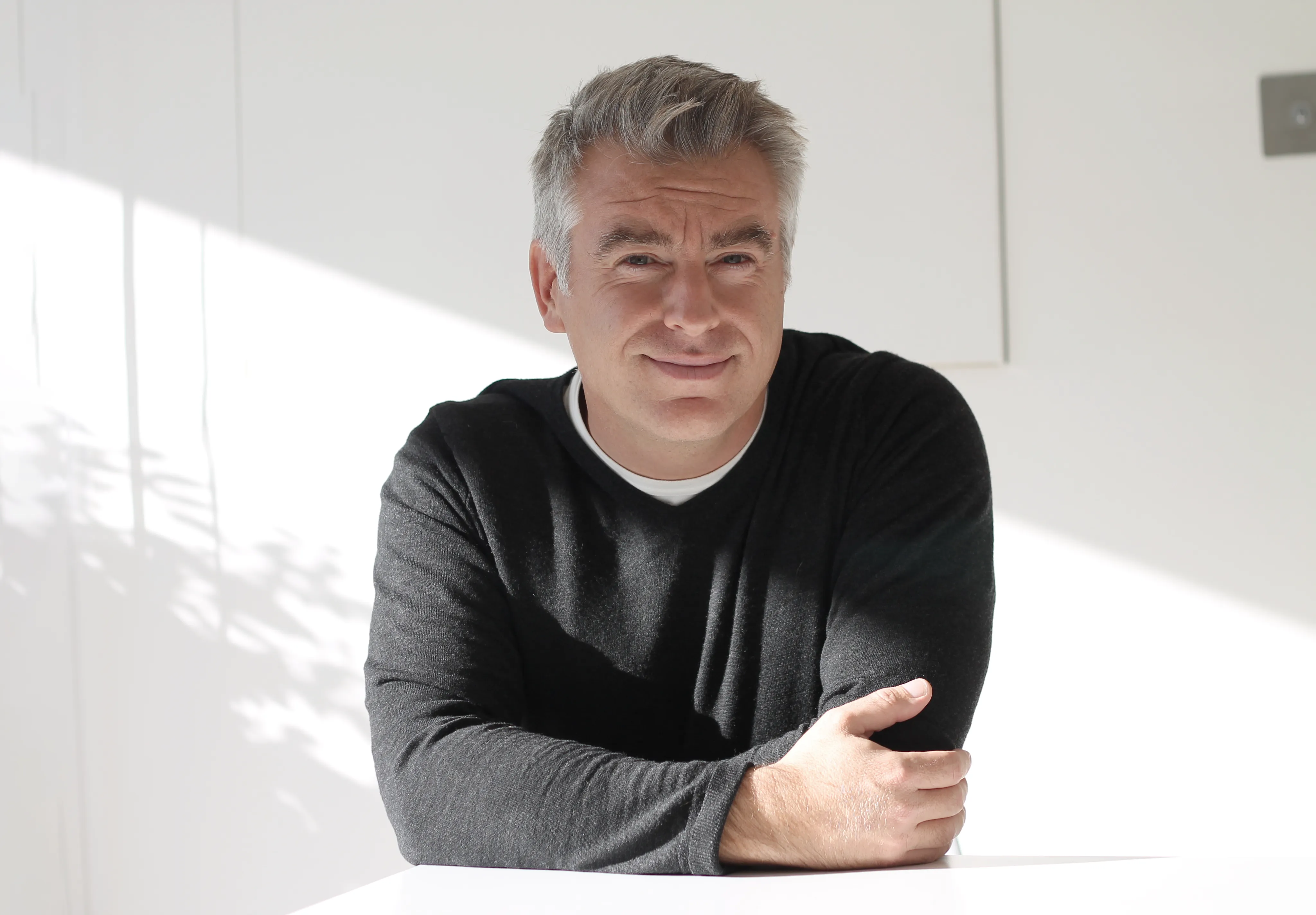
Jasper Morrison’s Punkt MP02 makes almost nothing of itself.
A compact bar-phone, a perfect array of tactile keys, a menu you could memorise in a minute. It has more in common with Braun than with any phone built to hold your attention.
That plainness is the point. After two decades of near-identical black mirrors, personality has become a risk many brands avoid taking.
Punkt takes the opposite bet: for design-literate buyers, carrying an object this quiet is a way of broadcasting control, taste, and a certain refusal to be marketed to. The phone says less so its owner can say more.
.
Credits and further reading


The power of nostalgia
You can’t miss what you never had, except, apparently, you can.
Most Gen Z buyers reaching for a dumbphone weren’t even alive the first time round, chasing a feeling closer to “anemoia” than memory – nostalgia for a past that was never theirs. It’s the same instinct behind Y2K throwbacks more broadly: flip phones, digital cameras, secondhand iPods. All playful nods to an era when technology felt exciting rather than extractive.
HMD’s latest Nokia reissues know exactly what they’re selling. Underneath the shell sits real modern tech, 4G, even an AI button, but none of that matters next to the shape. Bright plastic, chunky keys, that unmistakable curve. HMD is riding that Y2K wave with total confidence, selling an era that feels simpler in hindsight, whether or not it actually was.
And for all the modernity underneath, it still qualifies as a proper dumbphone where it counts: no app store, no social feed, nothing to scroll.
Credits and further reading

Niche, or the next shift?
The numbers say niche.
Feature phones remain a tiny share of global handset sales, and much of daily life (banking, boarding passes, two-factor codes) now assumes a smartphone is nearby. Few people are cutting the cord entirely.
But that may be the wrong test.
The dumbphone doesn’t need to replace anything to matter. As a second device, chosen deliberately for an evening or a weekend, it could end up more durable than any full smartphone exodus ever would.
If creating new and engaging value propositions is your challenge, we would love to bring our thoughts to that.
Want more of our perspective?